creativity

Spring Should Be Here Already

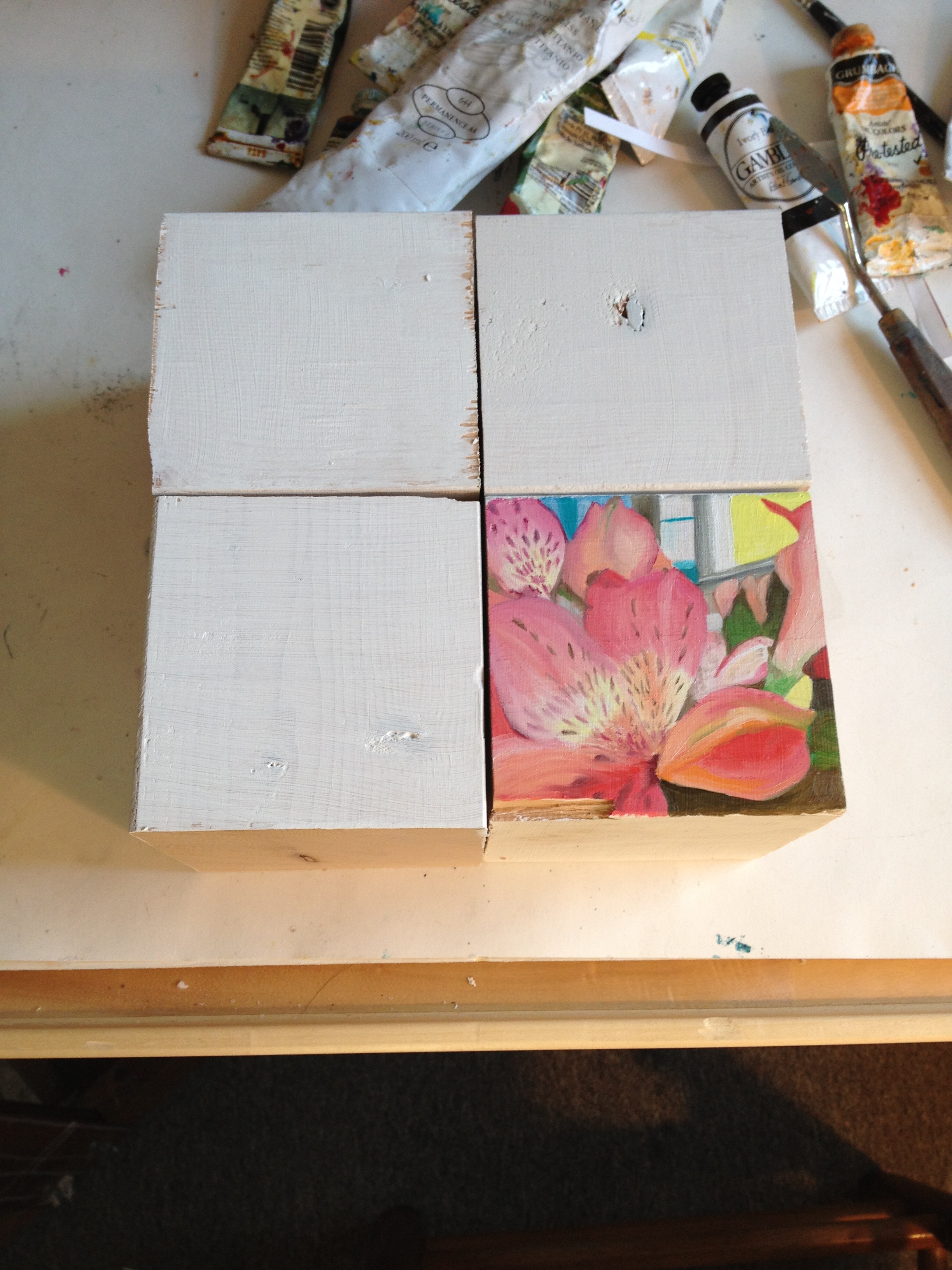
There are 29 of these blocks left in my studio...

There are 29 of these blocks left in my studio…

There are some things in the studio that are a beautiful metaphor for how our lives are really going.  My newest project sums up everything about my life as a yogi, a development professional, a wife, a mother, a person of faith.

Years ago, I painted a puzzle — it was eight smaller cubes that fit together to form a much bigger cube.  On the outside facades, I painted apples.  On the other facades of the individual cubes, there were aspects of a human face.  It sold in a show in Tennessee, and I was shocked.  I still miss it, like you miss an old friend.  I thought I would paint another one, but you start to understand the futility of this enterprise.  It is like saying, “I’ll have another child just like the one I just had.” It doesn’t happen.

So, when I started treating myself to a weekly bouquet of flowers, I thought — great idea for the facade of another puzzle piece!  My sweet hubby helped me pick out a beautiful piece of pine at Home Depot and waited as a patient wood-cutter split the beam into 33 pieces of 3.5 x 3.5 inch cubes.  They occupy a laundry basket in my studio.

The pics of these blossoms inspired me and the first painting of my first little cube came out pretty effortlessly in an afternoon.

Then life got in the way.  I subbed a lot of classes at the studio and I learned a lot, but didn’t paint at all. Then I  had a big event for work and didn’t spend any time painting. I wanted to make sure to spend time with the wonderful and giving hubby that would spend time with me in the Home Depot and is a wonderful friend and companion.  No painting — but lots of time with him. The second and the third facades were not as effortless.  The details of the flowers were not fun, they were painful — how many little lines are in those strange little green flowers?  How do you paint a flower that has petals like a cabbage, for God sakes? My back ached in the seat, I kept finding new distractions in the room…

The unpainted cubes mock me from the laundry basket. What was I thinking? Why is this project even remotely important?
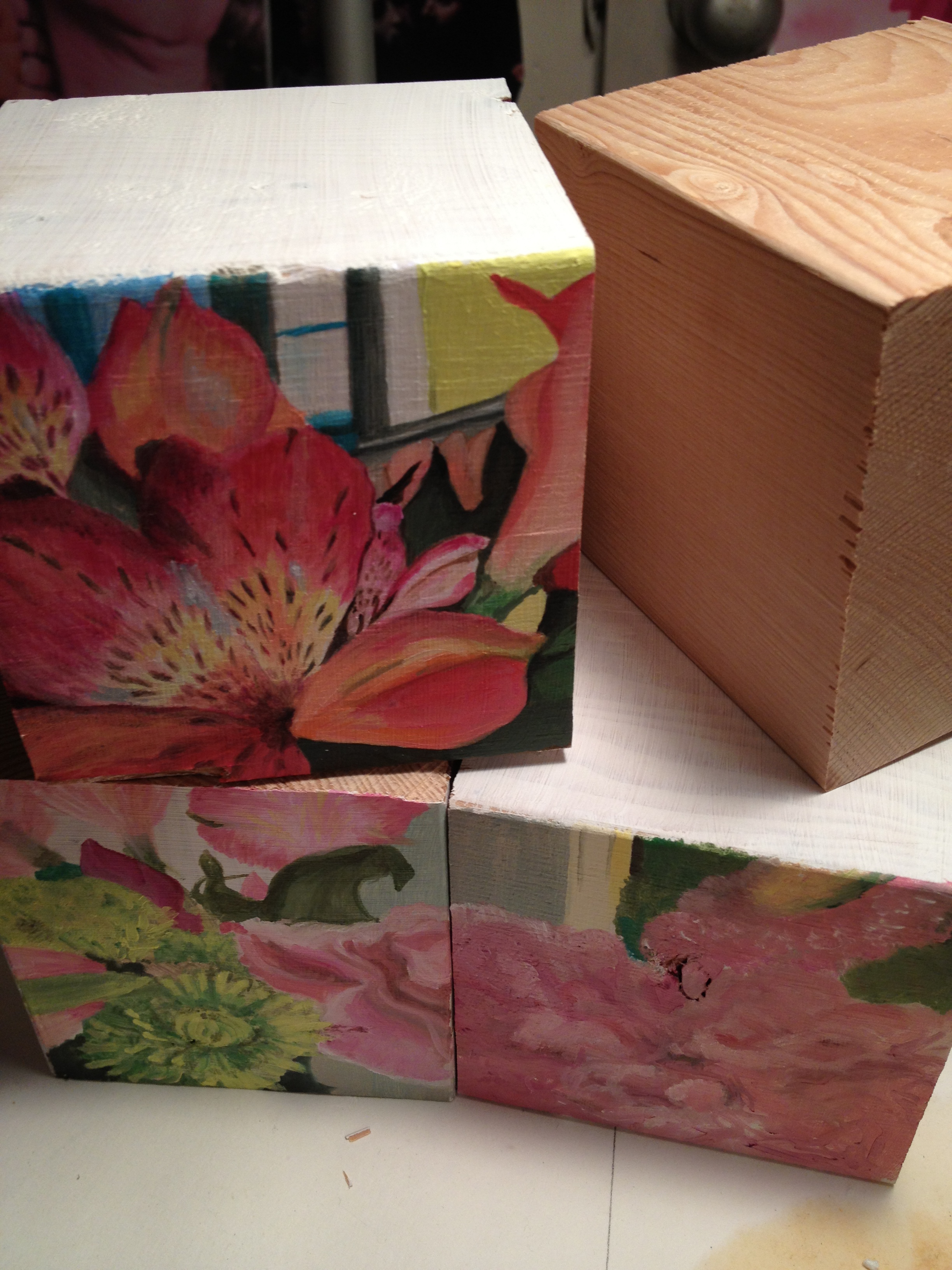
Now, still 29 blocks...

Now, still 29 blocks…

Even though I’ve lost my sense of purpose or process with this project, I  must get through these blocks.  I can’t have twenty-nine 3.5 inch cubes in our laundry basket any longer.

Spring needs to come soon, literally and figuratively.  As a meditative prayer, I’ll be painting lots and lots of very complicated flowers. And that’s the yogic/parenting/friendship/spiritual lesson.  Get on with it because we really, really need the laundry basket.  And spring.
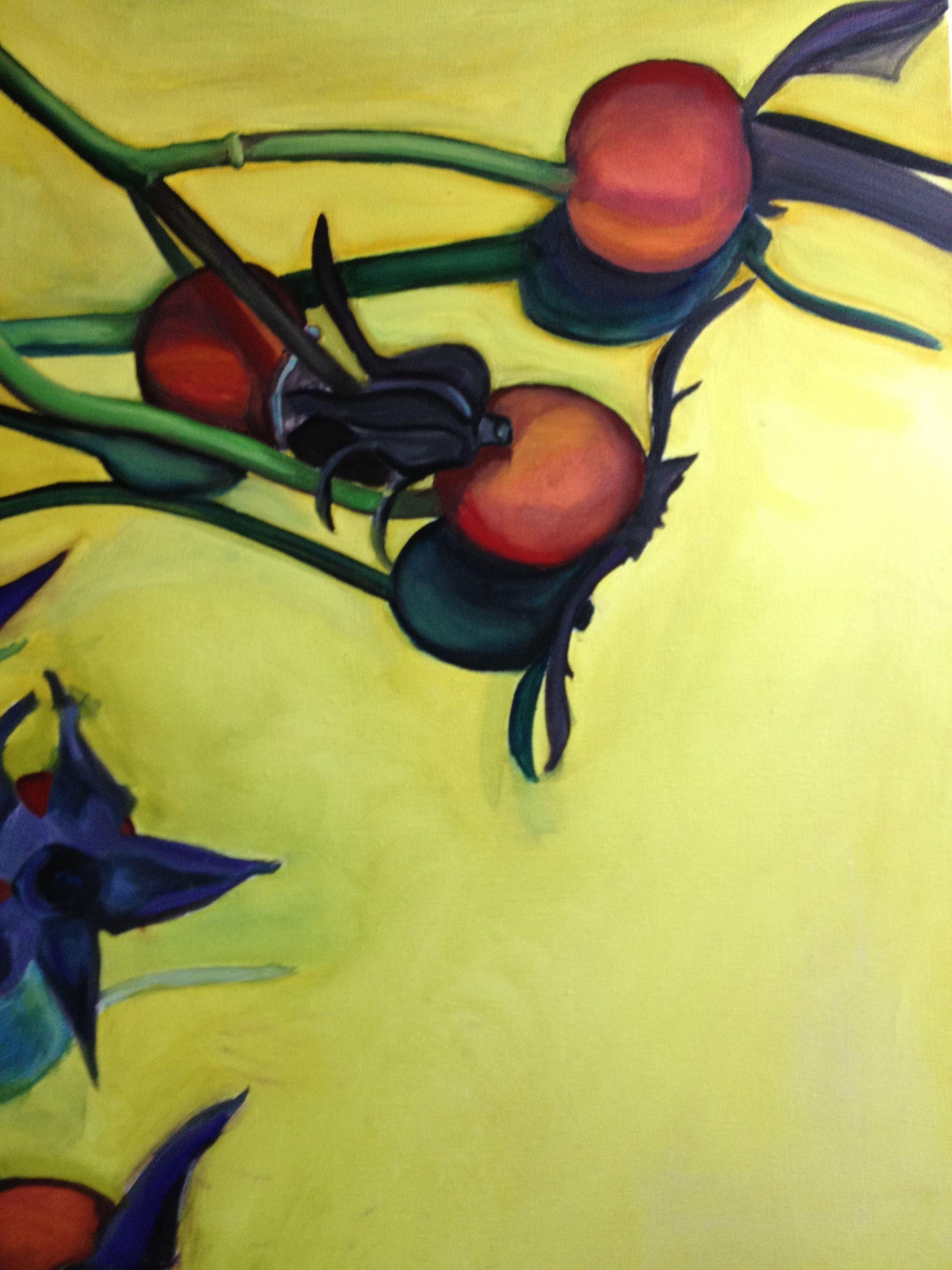
Rose Hips and Rosy Hips

I don’t know where I learned that the hips are where we store all of our emotions. I know it to be true though. When I’ve had a deep hip opening practice I feel like a dam has burst, and a few times this has ended in cleansing tears, much to the consternation of my family. Nevertheless, I resist hip openers in my own practice and haven’t found a really good way to work deep hip openers like pigeon pose into the hour-long early morning practice that I teach at Tranquil Space. My friend Alyson reminded me how much people love them, and so today I settled the class into pigeon and found my own heart opening vicariously.

I’d guess that hips have been on my mind for a while now. My own hips and the struggle against spread now that I’m fully planted in my middle-aged years. My daughter’s hips as I’ve watched as they’ve grown from boyish to beautiful in the past five years. My father’s and brother’s hips now that they are successfully replaced with titanium. When I cue asanas in class I feel as though I keep harping on “squaring the hips,” and have to smile to think of my mentor’s comment about “honest hips” in yoga practice.

I’ve also been working on this painting of rose hips, which are unusual in our severely landscaped neighborhood. Tom and I are notoriously terrible gardeners — we like to say that we grow children, not plants. A rose bush that I planted in the front yard has grown amok — sometimes falling over, other times hastily nailed up to the house, most of the time annoying Tom as he mows the front yard. We love to see it on that one week of the year when it is gloriously in bloom, then don’t pay it a bit of attention until the next year. It is a canopy to the window well where I keep my easel, and so when a sweet little chipmunk showed up to gnaw on acorns in front of the window as I was waiting for inspiration, I paid attention to him and then to the rose bush, which was covered in rose hips.

Rose bushes that aren’t well groomed grow rose hips — a fruit which holds rose seeds. And like all things in nature that are left to a little chaos, the lack of control can lead to wonderful sustenance. You can clip rose hips and make tea with a few of them, and jam if you have buckets of them. They have huge amounts of vitamin C and anti-oxidants. Thinking of eating this fruit reminds me of childhood. I can remember as a child having rose water liberally sprinkled on food. Or the Chartreuse green of Rose’s Lime Juice in a glass of soda and raw sugar. (Perhaps this is where the green-yellow comes from in the background of this painting.)

The pose of the month at the studio is bakasana, crow pose. This powerful pose requires open hips and a fearless heart as you hoist yourself up on the upper arms, balancing on hands, almost kissing the ground. The fruit of this pose is an open heart — tapping into emotions buried deep in the hip. As Alanna Kaivalya explains in Myths of the Asanas:

There’s a striking contrast between the way humans hold on to fear and the way animals freely let go of it…Asanas give us the opportunity to do just the same. We get the chance to move our life experience through our bodies by taking the shapes of the various forms in nature. We stretch and create space in our joints and muscles and do our best to embody the essence of each posture, learning its inherent lessons and experiencing freedom in that form. When this process takes hold and begins to release the fear from our body and our heart, we are able to live our lives joyfully, moment to moment. Fear lives in us as tension, and asana postures are designed to release tension from our bodies. The absence of tension is the absence of fear. And the absence of fear signifies the presence of joy, love and open-heartedness. As we embody these shapes in nature, we learn to fall in love with the world around us.

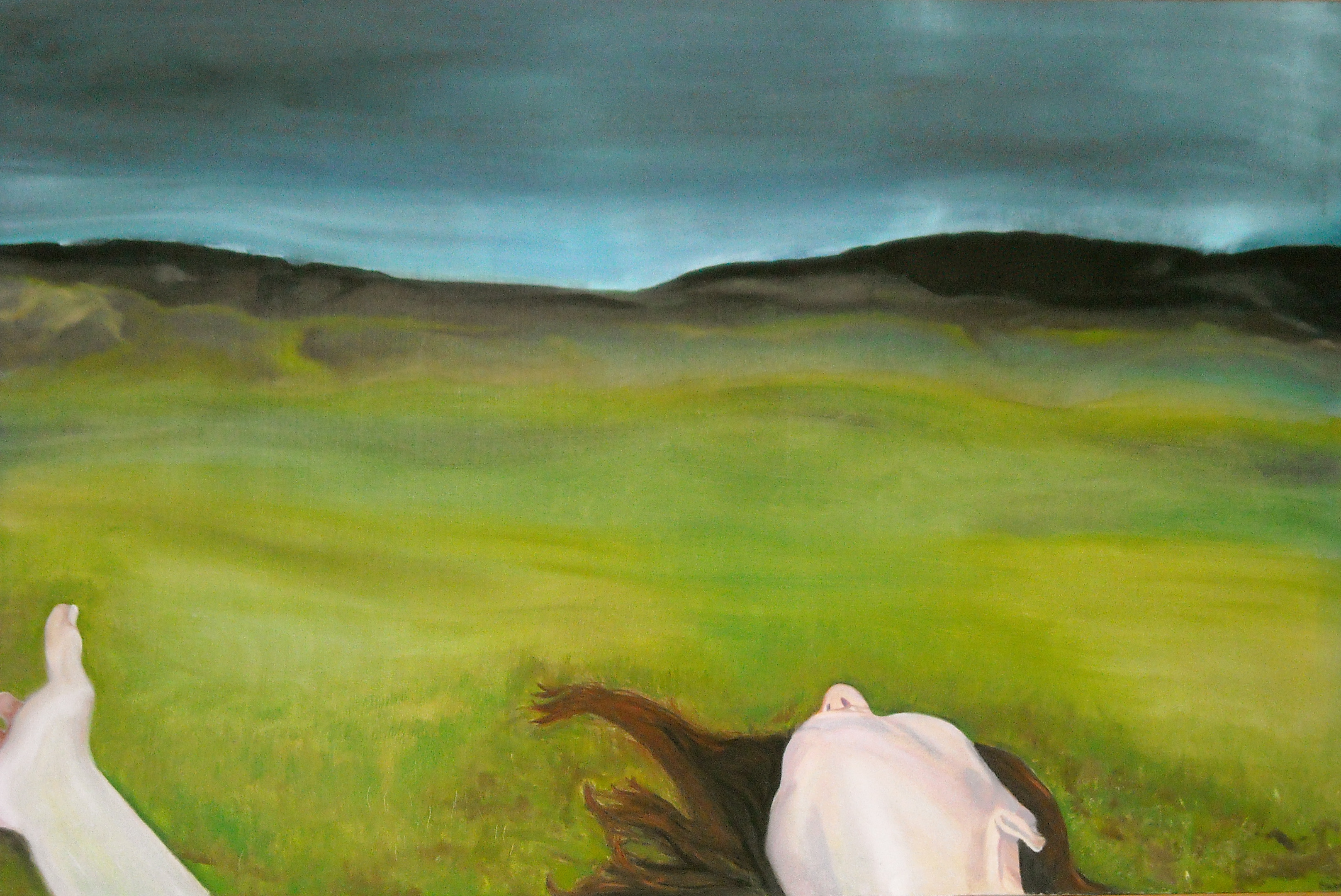
Looking back, fully free

Painted when I was lost and then found, seven years ago.

Most of my psychic energy in the past two weeks has been spent on new and sub classes and leaving my class at Pengu Studio.  On October 1 I started teaching the 7 am class at Tranquil Space Dupont and will begin the 6:45 am class at the Arlington studio on October 16.  On weekends I try out sequences, trying to get the flow right. I worry incessantly, and occasionally in the past week, I’ve been right to worry!  For all my big talk about embracing beginner’s mind, I’m terrible at it. As my beautiful and wise daughter reminded me, everyone is perfectly imperfect. Get over it.

But I don’t want to turn away from the worry, because it has been a dense, rich soil for my creativity.  For example, this month’s asana Bharadvajasana has been an inspiration for me on so many levels.  The pose has so much going on it — part hero, part lotus, deep twist, bind.  As I try it out in my body, I think of Andrew Wyeth’s painting, Christina’s World.  The autumnal colors and the fact that Christina turns away from the viewer gives the painting such a beautiful nostalgia.  But this feeling is balanced by the horizon — there is hopefulness of creation and the freedom of spaciousness.   This is exactly what Wyeth wanted us to take away.  Christina was a neighbor of Wyeth’s who was afflicted by polio, who “was limited physically but by no means spiritually.” Wyeth explained, “The challenge to me was to do justice to her extraordinary conquest of a life which most people would consider hopeless.”  (From the MOMA website. It is part of the permanent collection.)

The pose also brings to mind the Zen teaching:  “The past is already past.  Don’t try to regain it.  The present does not stay.  Don’t try to touch it.  From moment to moment the future will not come.”

Our nature is to turn back, to look for meaning, to right things that went wrong, to revel in the good feelings or wallow in the bad.  And even when we aren’t looking back, the past comes looking for us.

Two Mondays ago was the seventh anniversary of my Mom’s passing.  I hate to admit that this was the first year that I didn’t feel the loss in the marrow of my bones as the day approached.  That evening I ran into one of Mom’s dearest friends at a work reception.  It was a coincidence that was a gift .  It reminded me about what is truly important about my past.  We chatted until way too late about Mom, and I drove home feeling enlivened by the old stories, even the hardest one to relive, that of her last few months.

The next day, I went looking through the past for more of that warm embrace from the past.  I flipped through her correspondence from Bangladesh in the 70s — hoping that there was a message.  Anything for me here?  Lots of talk about Dad’s job, my first Brownie uniform, how much weight my little brother had gained, the incessant monsoon rains, the fabric she used for upholstery on the drab government issued chairs.  Nothing.  Just the past.

Bharadvajasana is fully ground in the present.  The sit bones are ground into the earth, the deep twist coming from the ribcage.  Even though the heart pulls us into the past, our root is in the present.

This poem by Linji has helped me get to this sense of freedom from, in spite of, because of the past:

If you want to be free,

Get to know your real self

It has no form, no appearance

no root, no basis, no abode.

But is lively and buoyant

It responds with versatile facility

But its function cannot be located

Therefore, when you look for it,

You become further from it.

When you seek it, you turn away from it all the more.

Moments of incompetence

Dr. Lovett Weems told this story in his lazy Mississippi drawl:

A preaching professor at a seminary answered the phone late one night to hear one of his recent graduates in what could only be described as a panic.  The graduate explained that he had to prepare for a funeral the next day and needed help.  “I’m happy to help,” the professor explained, “but you learned this just last month.”  Instead of launching into the how-tos, the professor referred his student to the syllabus and to the scripture that might be helpful, hoping to encourage his student.  After he spoke, there was silence.  And then a wail at the end of the other line:  ” But you don’t understand!  This guy’s really dead!”

Dr. Weems explained that real learning happened in these moments of sheer incompetence. I guess I should be thankful that I keep finding myself in these moments, but right now it would be really nice to feel competent.

One way I’m feeling incompetent today is that I made the decision to reuse canvases that the art therapist at Iona was throwing away because they had huge acrylic splotches all over them.  I decided these would be just the thing to help me get over the blank canvas issues I was having at the time. The last two posts contain examples of the sense of freedom I felt at one time, splotches and all.  But the acrylic is beginning to be really annoying.  It is hard to draw a straight line.  The perspective in the Joy in Labor post was…labored.  Today, as I faced yet another one of these bumpy painting days, I decided that I couldn’t paint the way I usually do.  I would have to let the bumps have their way.

Playing with form and color

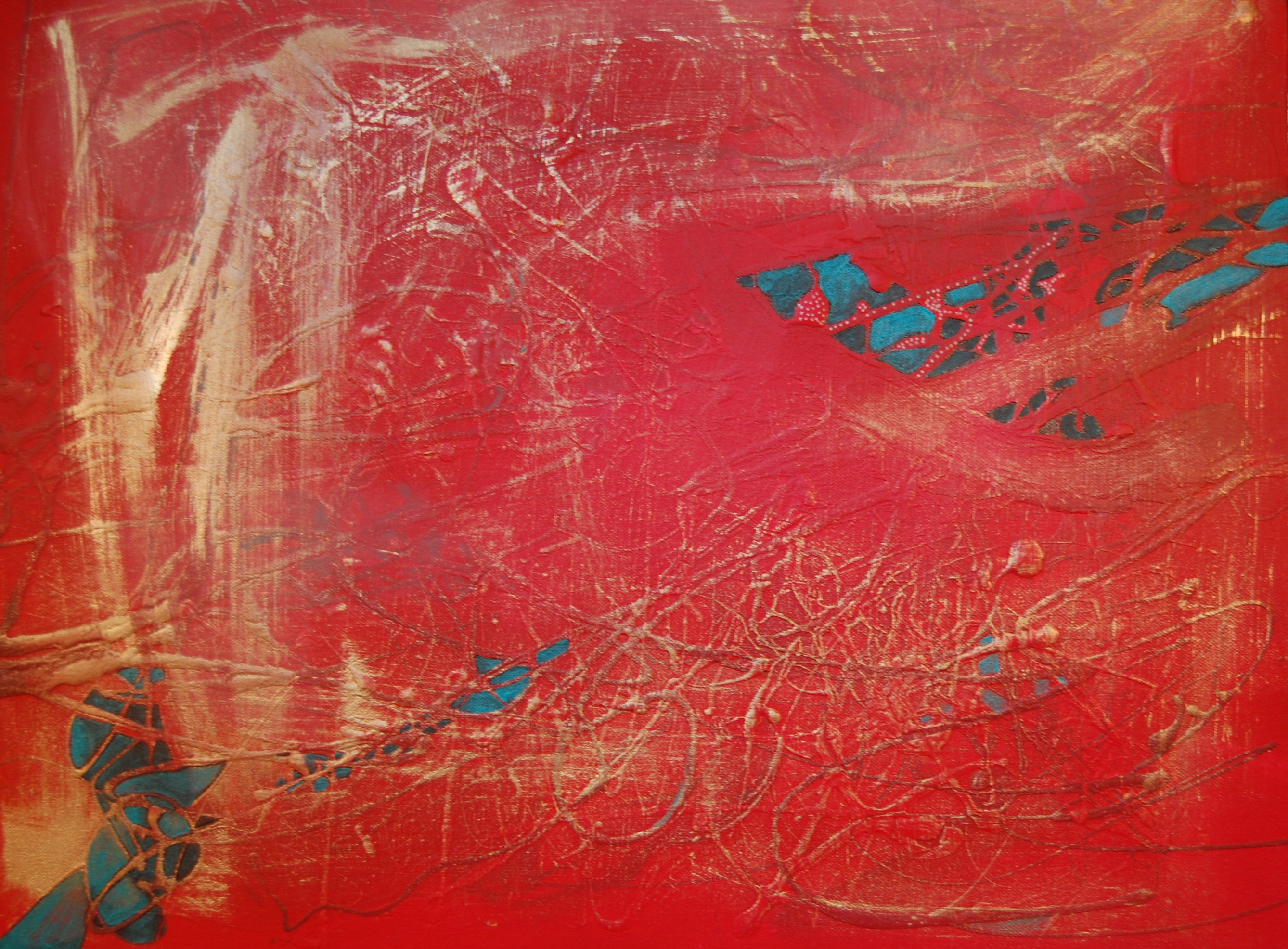
I’ve never felt competent with abstraction, but today the negative space beckoned.  I grabbed a sharpie and started.  An hour later, this is where I am.  Stepping back from the canvas, I was reminded of another painting I did a long time ago.

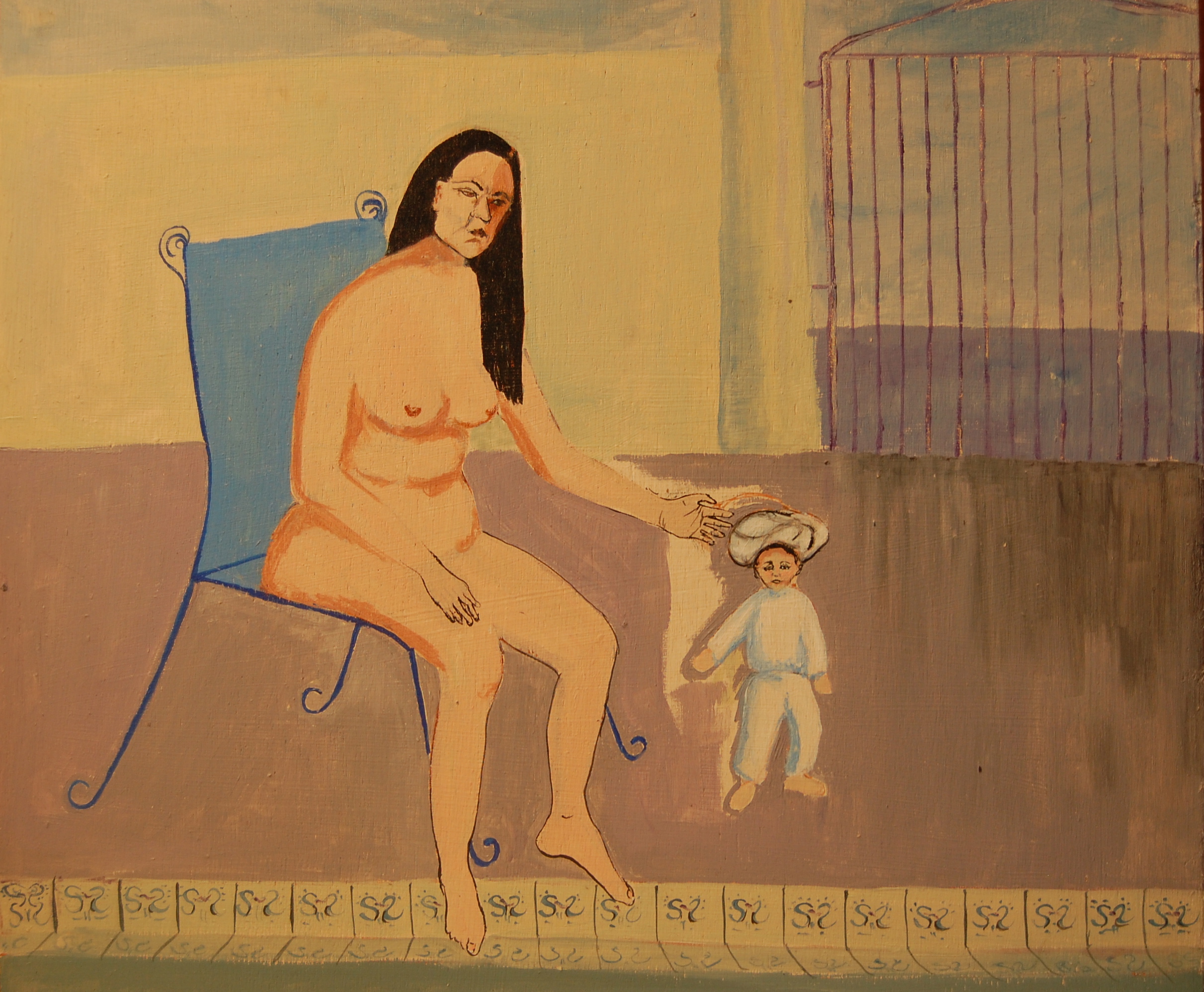
The very first painting I did was on a piece of board from the basement with five tubes of acrylic paint and one paint brush.  I really can’t remember what made me want to paint — perhaps it was that the kids were growing up and they didn’t need me so much in the evening.  I remember wanting to get this image out. See the black lines?  The blue?  This must be the way I find my way out of a problem.  Black lines and blue.

…and blue. Always blue.

In the practice of yoga, we are reminded that a beginner’s mind is something to be cultivated and valued.  The beginner’s mind has the wisdom of not knowing.  Nothing to say “you can’t do this,” or “don’t even try.”  A beginner’s mind hasn’t started to puff up about what it can do or do well.  It just is ready for the learning.

My take on these similarities is that the black lines allow my mind to focus — to see the form that is calling to me.  The blue is like the sky — open, vast, infinite.  Not a bad place to start to learn something new.  Finding form and sensing the freedom that wisdom brings.

Here’s the passage that I’m playing with as I get ready for tomorrow’s class:

Prevent trouble before it arises.  Put things in order before they exist.  The giant pine tree grows from a tiny sprout.  The journey of 1,000 miles begins beneath your feet.  Rushing into action, you fail.  Trying to grasp things, you lose them.  Forcing a project to completion, you ruin what was almost ripe.  Therefore, the Master takes action by letting things take their corse.  He remains calm at the end as at the beginning.  He has nothing thus has nothing to lose.  What he desires is non-desire.  What he learns is to unlearn.  He simply reminds people of who they have always been.  He cares about nothing by the Tao.  Thus he can care for all things.  

-Lao Tzu